
THINGS TO DO IN FAIRBANKS, ALASKA: A SEASON-BY-SEASON GUIDE
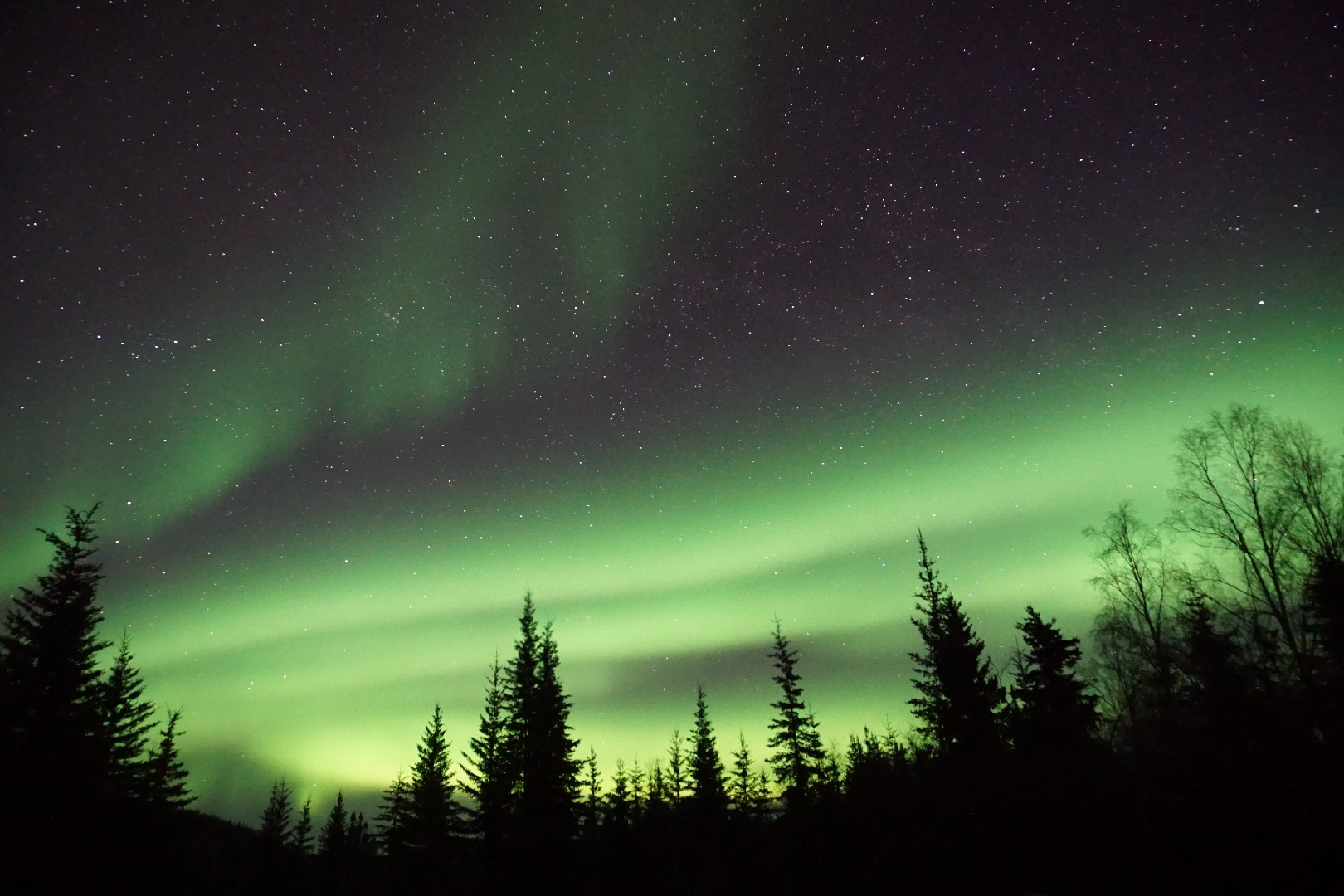
If you’re looking for things to do in Fairbanks, Alaska, the answer depends almost entirely on when you visit. Fairbanks is one of the rare destinations that delivers two completely different experiences depending on the season. September through March brings aurora borealis season and sub-arctic winter adventures. May through September offers the midnight sun, nearly 24 hours of daylight, and a side of Alaska most visitors never see.
So when is the best time to visit Fairbanks, Alaska? That depends on what you want. The northern lights draw most travelers here in winter, and for good reason. The city sits directly under the auroral oval, making it one of the best places on the planet for aurora viewing. But summer in Fairbanks is an entirely different trip worth planning around. Long days, warm temperatures, and access to Denali, the Dalton Highway, and a growing craft brewery scene make this a year-round destination.
As a Fairbanks-based tour company operating in every season, here’s what each part of the year actually looks like on the ground.
Things to Do in Fairbanks Alaska in the Winter (September – March)
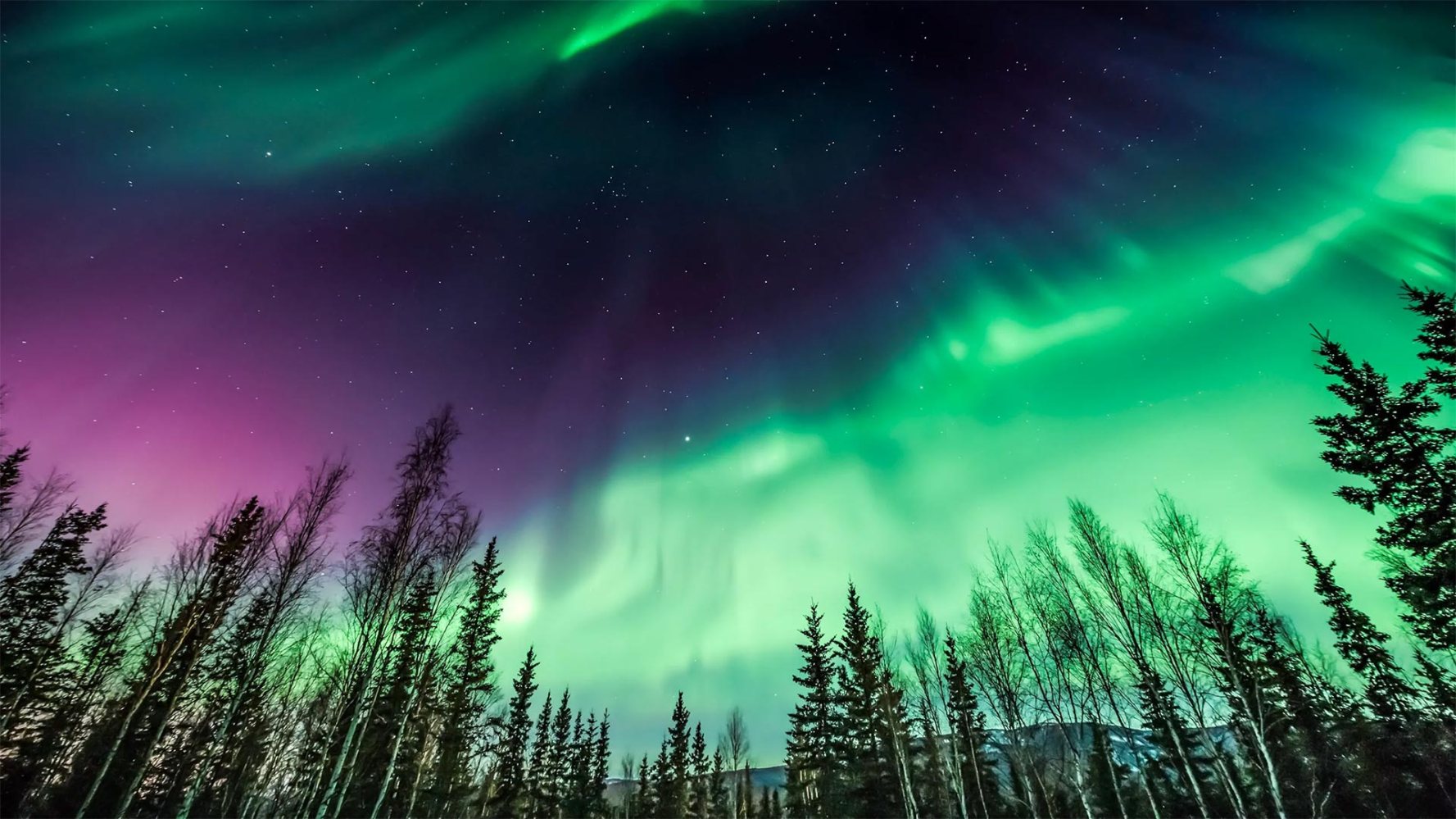
Winter in Fairbanks, Alaska is what puts this city on most people’s bucket list. The northern lights are visible from early September through late March, with peak viewing conditions typically in February and March when skies are clearest and nights are still long.
Fairbanks sits at 64° north latitude, directly beneath the auroral oval, the ring of aurora activity that circles the Earth’s magnetic poles. That geographic position, combined with cold, dry air that produces clear skies, gives Fairbanks an average of 240+ nights of aurora activity per year. It’s one of the reasons the University of Alaska Fairbanks built its Geophysical Institute here, and it’s why serious aurora travelers choose Fairbanks over coastal destinations like Anchorage, where cloud cover is far more common.
Winter Activities in Fairbanks
Winter in Fairbanks is more than the aurora. The season brings experiences you genuinely can’t find anywhere else in North America.
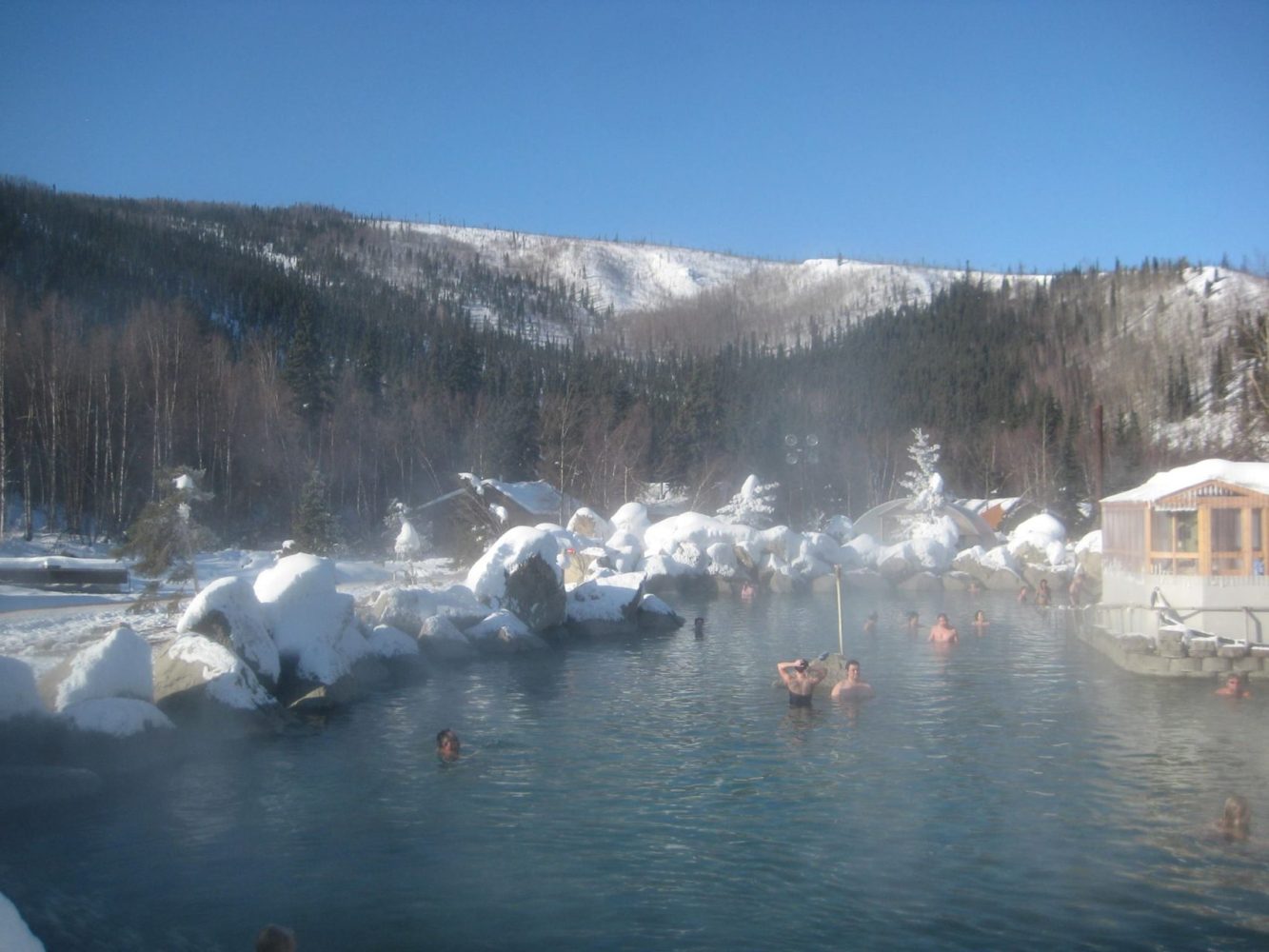
Northern lights viewing is the centerpiece. Guided tours take you to locations away from city light pollution, where your guide helps you spot and photograph the aurora as it develops. Some tours combine aurora viewing with a visit to Chena Hot Springs, where you can soak in 106°F natural mineral water under the night sky. Others take you across the Arctic Circle, a 6-hour journey into the wilderness along the Dalton Highway, with aurora viewing on the drive back.
Beyond the lights, winter visitors can go dog sledding, ride snowmobiles through frozen northern forest, try ice fishing on Interior Alaska lakes, or visit the Aurora Ice Museum at Chena Hot Springs Resort. The Ice Museum is a year-round gallery carved entirely from ice and kept at a constant 25°F inside.
Temperatures in winter range from about -20°F to 10°F. That sounds extreme, but Interior Alaska cold is a dry cold. It feels different than 20°F in Chicago or New York. Layering is everything: a good base layer, insulating mid-layer, and windproof outer shell will keep you comfortable for hours outside.
A note on the aurora: The northern lights are a natural phenomenon, and while Fairbanks offers some of the best odds of any destination on Earth, sightings can’t be guaranteed on any given night. Clear skies and solar activity both play a role. Our guides use real-time aurora forecasts and years of local knowledge to maximize your chances, and multi-night stays significantly improve your odds.
Things to Do in Fairbanks in the Summer (May – September)
If you think Alaska is only worth visiting in winter, you haven’t experienced Fairbanks in the summer.
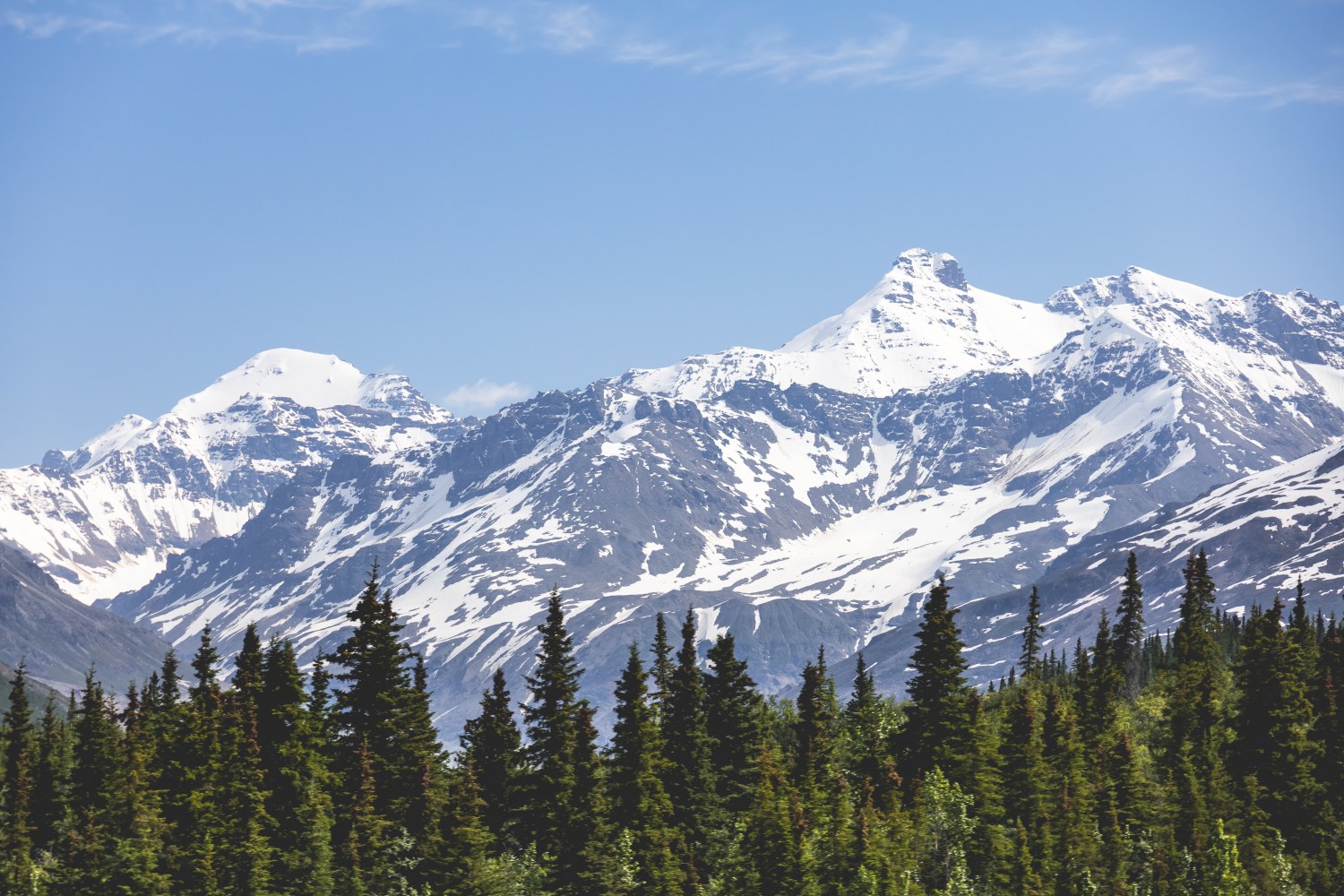
Around the summer solstice on June 21st, Fairbanks gets nearly 24 hours of daylight. The midnight sun barely dips below the horizon before rising again, creating a kind of perpetual golden hour that makes everything look surreal. The rivers, the mountains, the endless spruce and birch forests. Temperatures regularly reach the 70s and 80s°F, and locals will tell you there’s no better place on Earth to be.
Summer Activities in Fairbanks
Summer Fairbanks is a completely different destination than winter. The city comes alive, and the long days mean you can pack more into every trip.
In Fairbanks itself, there’s more to do than most visitors expect:
- Gold Dredge 8 takes you through the history of Interior Alaska’s gold rush
- Riverboat Discovery is a classic sternwheeler cruise on the Chena and Tanana Rivers
- Pioneer Park is a free city park with museums, shops, and restaurants
- Morris Thompson Cultural and Visitor Center offers an excellent introduction to Interior Alaska’s Indigenous cultures and natural history
- Local craft breweries have become a destination in their own right, worth an afternoon if you enjoy local beer
Day trips from Fairbanks open up even more of the state:
- Denali National Park is accessible as a day trip, and the drive south along the Parks Highway is one of the most scenic routes in Alaska
- Chena Hot Springs is just as worth visiting in summer, with hiking trails, a working geothermal greenhouse, and the same mineral pools (minus the snow)
- The Dalton Highway heads north toward the Arctic, offering some of the most remote and dramatic landscapes accessible by road in the United States
One of the best-kept secrets of summer in Fairbanks: it’s quieter than most Alaska destinations. While the cruise ship ports in Juneau, Ketchikan, and Seward see massive visitor volumes, Fairbanks stays relatively uncrowded. You’re getting an authentic Interior Alaska experience, not a tourist corridor.
Fairbanks vs. Anchorage: Why the Interior Is Worth the Trip
Most Alaska visitors fly into Anchorage and never make it to Fairbanks. That’s a missed opportunity. Anchorage is a great city, but Fairbanks gives you access to a part of Alaska that feels genuinely wild and remote. The Interior has clearer skies for aurora viewing, fewer crowds in every season, and a different character. More rugged, more local, less polished.
If you’re the kind of traveler who wants the real Alaska and not just the postcard version, Fairbanks is where you’ll find it.
For cruise passengers extending their trip: if your Alaska cruise ends in Whittier or Seward, Fairbanks is a natural add-on. A few extra days in the Interior gives you the Alaska that cruise itineraries can’t reach. The vast, uncrowded part of the state that most visitors never see.
The Shoulder Seasons: April and Late September
The shoulder seasons are Fairbanks’s hidden sweet spot for travelers who want the best of both worlds, or who prefer fewer crowds and lower prices.
April: Winter’s Last Act
By April, the days are getting noticeably longer. You’re gaining about seven minutes of daylight every day. Snow is still on the ground, winter activities are still running, and early April still offers dark enough skies for aurora viewing. It’s the last chance to experience the lights before the midnight sun takes over. Temperatures are milder (typically 10°F to 30°F), and flights and lodging are often cheaper than peak winter months.
Late September: The Golden Flip
Late September in Fairbanks is one of the most underrated travel windows in Alaska. The birch trees turn gold and the forest lights up in color. Daytime temperatures are cool but comfortable (30s to 50s°F), and there’s still enough daylight for outdoor activities. But the nights are getting long enough for aurora viewing again, which means you can hike in the afternoon and watch the northern lights at night. It’s a rare overlap that only lasts a few weeks.
Shoulder seasons are ideal for travelers who are flexible on dates, want to stretch their travel budget, or prefer a quieter Fairbanks experience with fewer visitors.
Planning Your Fairbanks Trip
How Many Days Should I Spend in Fairbanks?
Plan for a minimum of three nights to experience Fairbanks properly. That gives you time for two or three guided experiences plus free time to explore the city on your own. Four to five nights is ideal if you want to combine a northern lights tour with a Chena Hot Springs visit, an Arctic Circle day trip, or a Denali excursion without feeling rushed.
Many visitors combine Fairbanks with other Alaska stops (Anchorage, Denali, or a cruise) for a 7- to 10-day Alaska itinerary. Fairbanks works well as either the start or end point of that kind of trip.
Getting to Fairbanks
Fairbanks International Airport (FAI) has direct flights from major hubs including Seattle, Minneapolis, and Anchorage. You can also drive from Anchorage, about 5.5 hours north on the Parks Highway, which is one of the most scenic drives in the state. The Alaska Railroad runs a seasonal route between Anchorage and Fairbanks with some of the best train views in North America.
Do You Need a Car in Fairbanks?
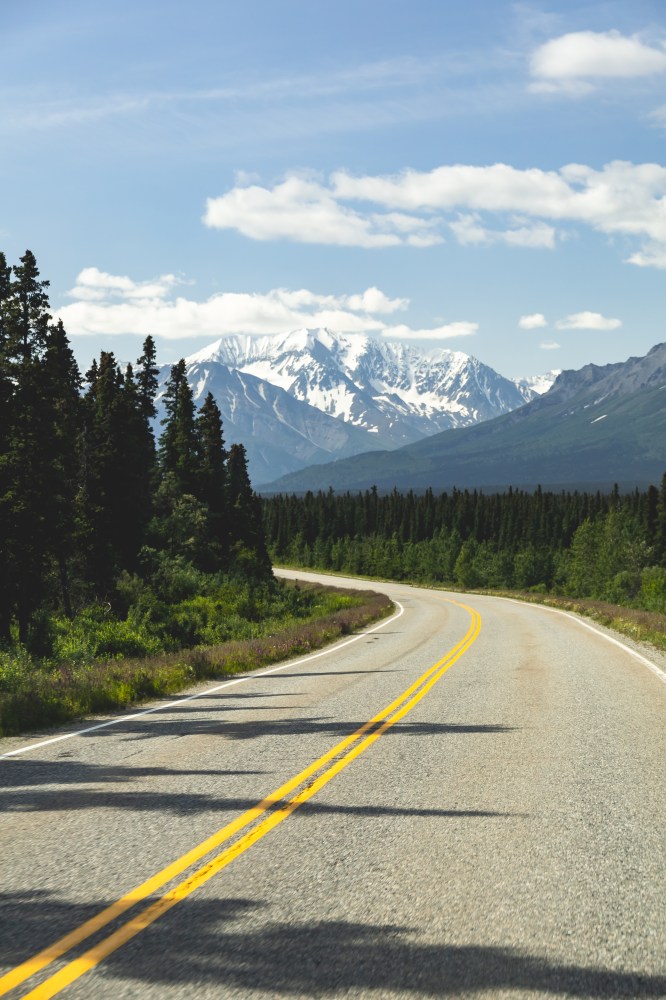
This is one of the most common questions we hear, and the honest answer is: it depends on what you’re doing. If you’re booking guided tours, many include hotel pickup and drop-off, which means you can fill your entire trip with experiences without needing a rental car. Fairbanks is spread out enough that getting around on foot isn’t practical, but rideshare and taxi options exist for in-town dining and exploring.
If you want to explore independently, a rental car gives you more flexibility. Just know what you’re getting into, especially in winter. Many roads outside of Fairbanks have limited or no cell service, and conditions can change quickly. Temperatures regularly drop below -20°F, and a breakdown on the Dalton Highway or the road to Chena Hot Springs is a very different situation than a flat tire in the Lower 48. If you do rent in winter, make sure the vehicle has a block heater and winter tires, and carry an emergency kit with extra layers, water, and a flashlight. Most Fairbanks rental companies prepare their vehicles for the cold, but it’s worth confirming when you book.
For travelers who aren’t comfortable with remote winter driving, guided tours are the safer and easier option. Your guide knows the roads, the conditions, and the area. That’s part of what you’re paying for.
Is Fairbanks Worth Visiting?
Short answer: yes, and it’s probably not what you’re expecting.
Fairbanks isn’t Anchorage, and it isn’t a cruise port. It’s a smaller city in the heart of Alaska’s Interior, and it rewards travelers who come with the right expectations. If you’re looking for the northern lights, Fairbanks is one of the best places on Earth to see them. If you’re looking for summer adventures without the crowds that flood Alaska’s coastal towns, Fairbanks delivers that too. And if you’re the kind of person who’d rather eat at a local brewery than a tourist restaurant, you’ll feel right at home.
The key is giving Fairbanks enough time. Three nights minimum, four to five ideally. Book a couple of guided tours so the logistics are handled, and leave room to explore the city on your own. You’ll leave with a very different impression of Alaska than someone who only sees the coastline.
Ready to Plan Your Fairbanks Trip?
Browse our Northern Lights Tours (September–March)
Explore our Summer Tours (May–September)
Not sure when to come? Contact us and we’ll help you pick the right season for what you want to experience.